
Google Trends Shows Researchers Are Searching for Faster Ways to Write Papers
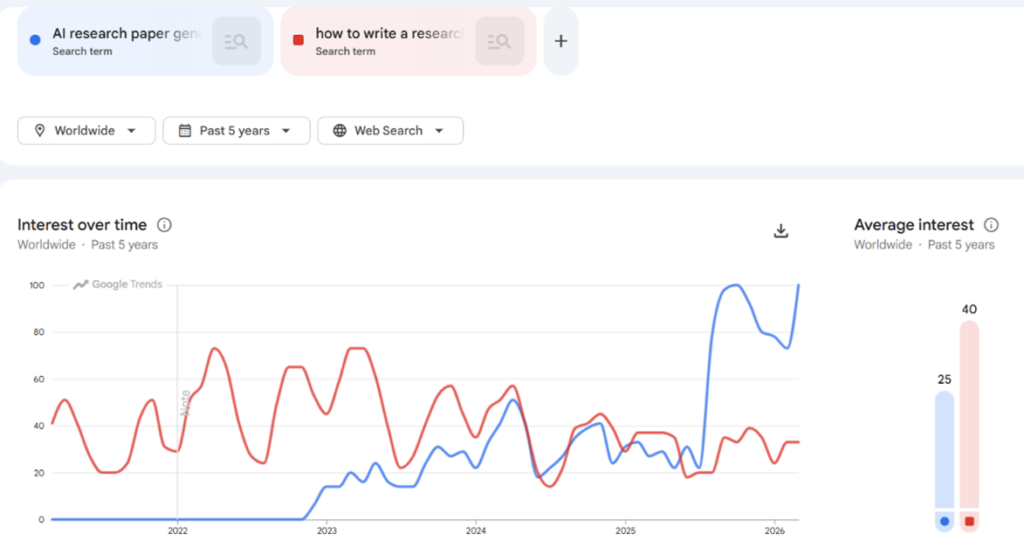
Search trends suggest a shift in researcher behaviour: from learning how to write a paper to finding faster ways to produce, prepare, and submit one.
Google Trends data from the past five years shows that interest in “how to write a research paper” has stayed relatively consistent, while searches for “AI research paper generator” have grown sharply. For publishers, this signals a meaningful shift in researcher intent, from learning the process to speeding it up. But this change also brings clear risks that should not be overlooked.
What the trend suggests
This does not mean authors no longer care about quality. It suggests that more researchers are under pressure to work faster and are actively looking for tools that reduce effort in the writing process. The danger, however, is overreliance. Large language models may not fully understand the nuance, context, or depth behind every research paper, which means their output is not always reliable.
For publishers, this creates a clear need to support authors more effectively, especially in high-impact sections such as abstracts, where AI-generated wording can subtly change how a paper is framed and understood.
Why this matters for publishers
As AI writing tools become more visible, publishers have an opportunity to help authors use them responsibly while reinforcing standards around originality and research integrity.
The opportunity
This is a chance for publishers to strengthen author relationships by offering:
• Clear AI usage policies
• Practical writing support
• Submission readiness resources
• Education for early-career researchers
Conclusion
The rise in AI-related search interest is a signal that author behaviours are changing. Publishers that respond with useful support will be in a stronger position to serve the next generation of researchers. Could better author education become a competitive advantage for your journals?
How We Can Help
Our marketing team is constantly analysing the market to help publishers build a competitive advantage. We understand how difficult it can be to keep up with new trends, shifting author behaviour, and evolving expectations. If you have any concerns about your journals, we would be glad to discuss them with you.